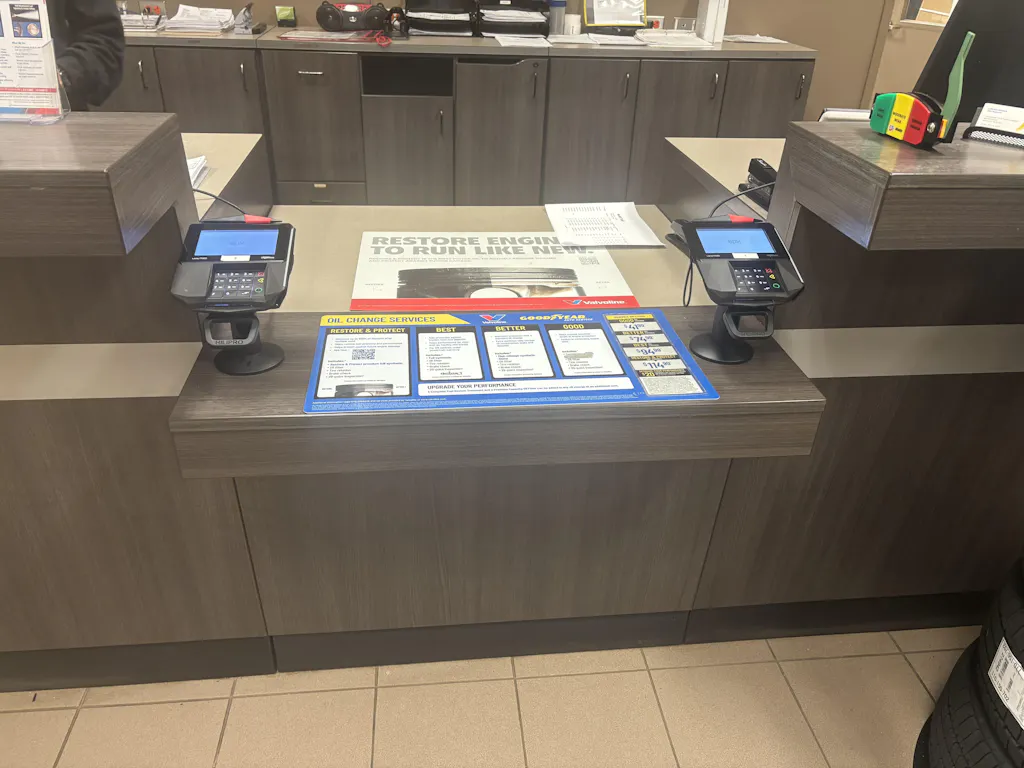
So you're setting up a checkout counter, or maybe you're upgrading an old one, and now you're stuck choosing between a rotating terminal stand and a fixed terminal stand.
This decision matters more than most people think. The right POS stand affects how fast customers check out, how secure your terminal is, and whether your staff has to awkwardly lean over the counter every five minutes.
Let's break it down.
Both are used to hold payment terminals at a checkout counter. But they work very differently.
A rotating terminal stand (also called a swivel POS stand) lets you spin the terminal toward the customer for PIN entry, signing, or tapping a card. A fixed terminal stand stays locked in one position. It's solid, stable, and doesn't move.
Simple enough. But which one is right for your business? That depends on a few things. Let's look at each one.
A rotating terminal stand can swivel between 180° and 360°, and most also tilt up and down so customers can see the screen clearly. You point the terminal at yourself, process the payment, then spin it to the customer. Easy.
They're especially good for touchscreen terminals, think contactless payments, digital signatures, or any time the customer needs to interact with the screen.
A fixed terminal stand remains in place. No spinning, no tilting it's mounted in one position, and that's where it stays.
That sounds limiting, but it's actually a strength in many setups. Fewer moving parts means fewer things that can break or get misaligned over time. Fixed stands are compact, sturdy, and harder to tamper with, which matters a lot in high-theft environments.
Ready to find the perfect POS terminal stand? Shop Hilipro's full range of rotating and fixed POS stands compatible with Verifone, Ingenico, PAX, Dejavoo, and more.

|
Feature |
Rotating Stand |
Fixed Stand |
|
Customer Interaction |
Easy |
Limited |
|
Durability |
Good (has moving parts) |
Excellent |
|
Cost |
Higher |
Lower |
|
Security |
Very strong (with locking) |
Excellent (bolted down) |
|
Transaction Speed |
Fast |
Fast |
|
Flexibility |
High |
Low |
|
Maintenance |
More upkeep |
Minimal |
|
Space on Counter |
Medium |
Compact |
At the end of the day, the biggest deciding factors are how much your customer needs to touch the terminal and how much wear it will take daily. If customers need to sign, tap, or enter a PIN themselves, go with a rotating stand. If your workflow is mostly staff-operated, a fixed stand might be all you need.
Ready to upgrade your checkout experience? Explore Hilipro's rotating and swivel POS stands are built for retail, restaurants, and everywhere in between.
Want to understand more about keeping your terminals safe? Check out How to Prevent Credit Card Terminal Theft: It covers exactly what to look for in a secure setup.
Retail Stores and Boutiques
Retail customers expect a premium checkout experience. A swivel POS stand lets them interact naturally with the terminal no awkwardness, no waiting for the cashier to flip the screen.
Restaurants and Hospitality Businesses
Tableside payments, bar checkout, and front desk anywhere customers and staff share access to the terminal are perfect use case. Restaurants especially benefit because servers and guests both need to interact with the screen.
For more on this, Top POS Mounting Solutions for Restaurants and Cafés is worth a read.
High-End Customer Service Environments
Spas, salons, and luxury boutiques are all places where the checkout experience is part of the brand experience. An adjustable payment terminal just looks and feels more polished.
Find the right swivel stand for your business. Browse Hilipro's full ipad POS stand collection and filter by terminal brand.

Grocery Stores and Fast-Food Counters
Speed is everything here. Staff-operated terminals where the customer mostly just taps a card don't need to rotate. Fixed stands keep things simple and quick.
Self-Service Kiosks and Unattended Stations
If nobody's watching the terminal, security is priority one. A fixed, locked-down stand is way harder to steal or mess with than a swivel stand.
High-Traffic Checkout Areas
Grocery stores, pharmacies, and big-box retail these environments see hundreds of transactions daily. Fixed stands handle that kind of volume without wearing out.
Recommended read: POS Stands That Work Best in Self-Checkout Scenarios
Here is the comparision:
Rotating stands cost more mostly because of the swivel and tilt mechanism. You're paying for the extra engineering. Fixed stands are simpler and cheaper to manufacture, so the price reflects that.
The swivel joint in a rotating stand will eventually wear down with heavy use. Quality commercial-grade stands are built to last, but it's still something to factor in. Fixed stands? Basically no maintenance.
Honestly, it depends on your transaction volume and what your customers need.
High customer interaction → rotating stand pays for itself in better checkout flow
High volume, staff-operated → fixed stand wins on durability and lower cost
Consider Your Counter Space
Rotating stands need a bit of clearance to spin. If your counter is tight, check the swivel radius before buying. Fixed stands are usually more compact.
Check Payment Terminal Compatibility
Not every stand fits every terminal. If you're running Verifone, Ingenico, PAX, or Dejavoo — make sure the stand is made for your model. Hilipro makes stands specifically designed for most major terminals, so compatibility is straightforward.
Think About Customer Interaction
If your customers need to tap, sign, or enter a PIN get a rotating stand. If your staff handles the terminal the whole time, "fixed" is fine.
Choose the Right Material and Build Quality
Steel and aluminum stand out longer than plastic ones, especially in high-traffic environments. Plastic is fine for light-use setups, but for anything commercial, metal is a smarter investment.
Recommended read: Ingenico vs Verifone Stand Compatibility Guide solid breakdown if you're unsure which stand fits your terminal.
Rotating and fixed terminal stands both do their job well just in different situations.
Go with a rotating terminal stand if your customers interact with the terminal directly, you're in retail or hospitality, or you want a smoother, more modern checkout experience.
Go with a fixed terminal stand if security is your top concern, your staff handles the terminal mostly, or you need something durable and low-maintenance for high-volume use.
Ultimately, the right stand makes checkout faster, safer, and less annoying for everyone. And that's worth getting right.
Not sure which stand fits your terminal? Contact Hilipro, the team can help you find the right rotating or fixed terminal stand for your exact setup.
A rotating terminal stand can swivel or tilt toward the customer for easier payments and signatures, while a fixed terminal stand stays in one position. Rotating stands improve flexibility and customer interaction, whereas fixed stands provide stronger stability and security.
Rotating terminal stands are usually better for retail stores because they improve customer interaction and make PIN entry easier. Fixed stands work better in fast-moving checkout areas where speed and durability matter more than flexibility.
Modern swivel POS stands can be very secure when they include locking systems and anti-theft mounting features. Businesses should choose secure payment terminal stands designed for commercial environments.
Rotating stands may experience more wear over time because they have moving parts. However, high-quality commercial-grade swivel POS stands are designed for heavy daily use and long-term durability.
Yes, fixed terminal stands are generally more affordable because they have simpler designs and fewer moving parts. They also require less maintenance over time.
Restaurants usually benefit from rotating terminal stands because servers and customers can easily share access to the payment terminal during transactions.
Yes, rotating terminal stands can reduce transaction time by making payment access easier for customers. Faster PIN entry and smoother card handling help improve checkout efficiency.
A good POS stand should include locking mechanisms, anti-theft protection, cable management, and strong mounting support to protect the payment terminal.
Rotating stands can work well on small counters if they are compact and designed with efficient swivel clearance. Businesses should measure available counter space before installation.
Grocery stores, fast-food counters, self-service kiosks, and other high-volume checkout environments commonly use fixed terminal stands because they are stable, durable, and secure.